Birth Chart Compatibility: Why Sun Signs Lie to You
The short answer
Birth chart compatibility extends far beyond sun signs. True relationship astrology involves synastry—the detailed comparison of two complete natal charts examining Venus (love), Mars (desire), Moon (emotions), and planetary aspects. While sun signs provide surface-level insights, Venus placement determines actual romantic attraction, Moon signs reveal emotional compatibility, and challenging aspects like squares and oppositions often indicate growth-oriented partnerships stronger than harmonious signs alone.
The Sun Sign Trap: Why Your Horoscope App Gets It Wrong
You've heard it a thousand times: "Leos and Scorpios don't mix" or "Capricorns are compatible with Taurus." That's astrology filtered through a coffee-shop lens. The truth is harsher and more useful: checking only sun signs for relationship potential is like judging a person by their job title alone.
A Capricorn sun (the rational achiever) paired with a Sagittarius sun (the restless adventurer) looks like a mismatch on paper. But if that Capricorn has a Sagittarius Moon and the Sagittarius has a Capricorn Venus? The emotional and romantic layers flip the script entirely. Synastry, the astrological comparison of two birth charts, reveals this hidden machinery. Generic apps cannot.
This post walks you through synastry systematically: what it measures, which planetary contacts matter most, how to read overlays, and why your sun sign compatibility score is incomplete data passed off as truth.
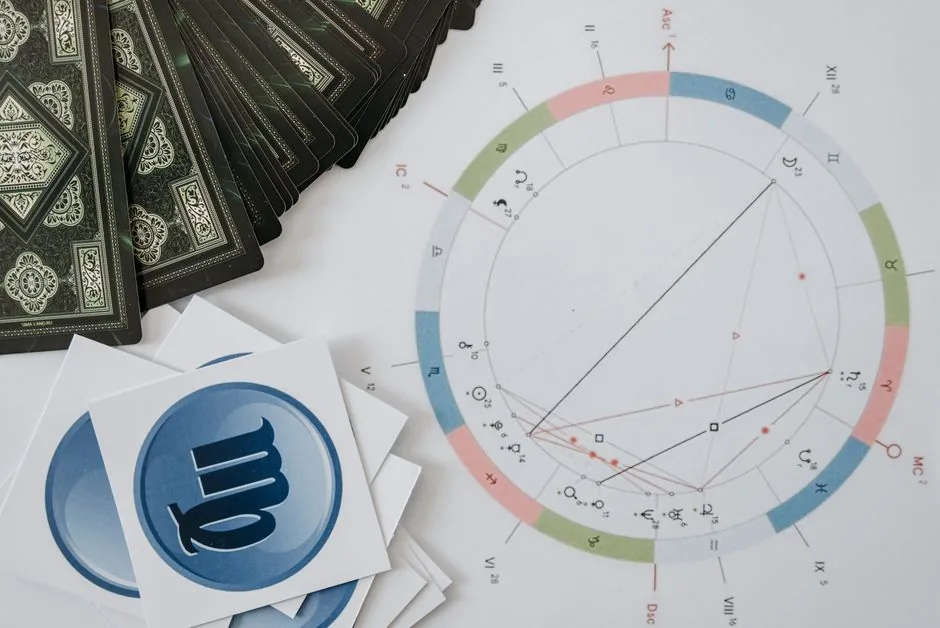
What Synastry Actually Measures
Synastry is the practice of overlaying one person's birth chart on top of another's and reading the angles (called aspects) between their planets. Instead of asking "Is Aries compatible with Pisces?", synastry asks the real question: "What happens when her Mars (desire, aggression, sexuality) forms a 60-degree angle to his Venus (what he loves)?" Those angles are the signal. The sun signs are just demographics.
The core synastry read examines five planetary pairs:
- Sun to Sun, Moon, Venus, Mars: How you perceive each other; foundational identity match.
- Moon to Moon, Venus, Mars: Emotional safety, nurturing patterns, instinctive attraction.
- Venus to Venus, Mars: Romantic values, desire expression, sexual chemistry.
- Mars to Mars, Venus: Conflict style, drive alignment, passion match.
- 7th house ruler to partner planets: What you seek in marriage; the gravitational center of partnership.
Each pair can form one of several aspects: conjunction (0°, merged), trine (120°, easy), sextile (60°, supportive), opposition (180°, tension), or square (90°, friction). A single trine between Venus signs can soften a harsh Mars square. A hard aspect between Moons can undermine an otherwise harmonious connection. The constellation of contacts matters more than any one piece.
The Five Planetary Contacts That Actually Predict Relationship Longevity
1. Venus-Mars Aspects: The Attraction Engine
When one person's Venus (what they love, value, desire) touches another's Mars (sexuality, assertiveness, willpower), you get chemistry or friction, sometimes both at once. A Venus trine Mars is straightforward: her softness is exactly what turns him on, and his drive makes her feel alive. They don't second-guess the attraction; it flows.
A Venus square Mars, conversely, produces a push-pull dynamic. His sexual energy feels too aggressive or demanding to her, or her romantic preferences feel emasculating to him. But here's what generic apps miss: this tension can become the glue in a long-term bond if both people have maturity and self-awareness. The friction keeps you working, communicating, staying engaged instead of coasting.
A Venus opposition Mars (180°) is the most infamous: magnetic, volatile, obsessive chemistry that can burn fast or deepen through deliberate commitment. Celebrities with this aspect often describe instant, inexplicable attraction followed by either marriage or a breakup within months. The question isn't whether you're compatible, it's whether you're willing to metabolize the intensity.
2. Moon-Moon Aspects: The Emotional Operating System
Two Moons conjunct (in the same sign) create emotional mirroring. You process feelings the same way, hold the same unspoken fears, and soothe each other intuitively. This is the easiest aspect for long-term companionship because you feel psychologically safe without needing to translate your inner world.
A Moon trine Moon (120°) is nearly as smooth. You're different enough to be interesting but similar enough to get each other's pain without explanation. A Taurus Moon paired with a Capricorn Moon both value stability and will move through grief at roughly the same pace.
A Moon square or opposition, however, is where real learning happens, or where resentment festers. A Cancer Moon (moody, sensitive, family-focused) squared by an Aquarius Moon (detached, logic-driven, group-focused) will clash on how to handle vulnerability. Cancer wants intimacy and reassurance; Aquarius wants intellectual freedom and space. Without consciousness, these moons drain each other. With it, they teach each other balance.
Generic compatibility scores often downgrade Moon squares. But therapists and long-married couples will tell you that the friction has taught them everything. You don't need a Moon trine to last; you need willingness to understand why your partner retreats when you lean in.
3. Venus-Venus Aspects: Romantic Language and Values
Two Venus signs in trine or sextile make partnership easy because you want the same things from love. Both value devotion, or both want freedom, or both crave beauty and art. You're not negotiating core values; you're both reaching for the same version of romance.
A Venus square between charts is more complex. One Venus might be in a fixed sign (Taurus, Leo, Scorpio, Aquarius) demanding loyalty and consistency, while the other is in a mutable sign (Gemini, Virgo, Sagittarius, Pisces) wired for novelty and flexibility. You're arguing about what love itself means, not just how to express it. This requires conscious compromise.
Venus oppositions can feel like you're loving in opposite languages. One person's Venus in Aries wants spontaneity and bold gestures; the opposite Venus in Libra wants refinement and careful negotiation. Neither is wrong. Both require translation. Couples with Venus oppositions often report that learning their partner's love language became the most important skill they developed.
4. Mars-Mars and Sun-Mars Aspects: Drive and Conflict Alignment
Two Mars signs in harmonious aspect (trine or sextile) mean you argue the same way and pursue goals with compatible intensity. You both want to fight about things and move on, or you both prefer to avoid conflict and process quietly. Misalignment here is underestimated: if one Mars is cardinal (action-oriented Aries, Cancer, Libra, Capricorn) and the other is mutable (thinking-first Gemini, Virgo, Sagittarius, Pisces), one partner wants to solve problems immediately while the other needs time to gather information. You'll feel constantly frustrated with each other's pace.
A Sun-Mars square (one person's core identity in friction with the other's sexual assertiveness) often looks like one partner feeling emasculated or disrespected by the other's force of will. A Libra Sun (diplomatic, people-pleasing) squared by an Aries Mars feels dominated or too pushed. An Aries Sun loves the directness but may not notice they're running over the Libra's need for partnership and consensus.
A single harmonic aspect cannot override patterns of incompatible drives. Two people who want different things from conflict resolution will exhaust each other, no matter how good their Venus trine looks on paper.
5. North Node Contacts: Growth Direction and Life Purpose Alignment
Your North Node (the point of soul growth, in traditional astrology) shows what you're here to develop. When one person's North Node conjuncts or trines the other's key planets (Sun, Moon, Venus, Mars), that relationship becomes a classroom. The other person triggers your evolution, not always painlessly.
A partner whose North Node is conjunct your Sun may challenge your ego and sense of self in ways that feel deeply uncomfortable but ultimately expand who you are. A partner whose North Node touches your Venus might push you to evolve your values or love language. These contacts aren't about ease; they're about becoming.
Apps don't measure North Node contacts because they require knowing exact birth times (which produce exact house placements) and understanding traditional astrology's language of growth. But for people seeking relationships with deeper purpose, these aspects signal a fated quality, not meant to be easy, but meant to transform you both.

The 7th House and Ruler Overlays: What You Actually Seek in Partnership
The 7th house in your birth chart rules marriage, contracts, and the partner you attract. Its ruler (the planet that governs the sign on the 7th house cusp) is your relationship compass. If your 7th house ruler is Venus, you seek beauty and harmony. If it's Mars, you seek passion and a worthy opponent. If it's Saturn, you seek stability and a long-term commitment.
Synastry reads the partner's chart against your 7th house. Does their Sun fall in your 7th? They feel "marriage material" instantly, you see them as a partner. Does their Venus fall in your 7th? You feel romantically drawn; they seem to embody your ideal. Does their Saturn fall there? You feel the gravity and commitment weight; they seem serious and permanent.
A classic example: A person with a 7th house ruler of Jupiter (expansive, optimistic) will be attracted to partners who offer adventure, growth, and possibility. If their partner's Mars (aggression, self-focus) falls in that person's 7th, the partner will feel energizing at first, a force that pushes them forward. But if the partner's Saturn (restriction, discipline) also falls there, the relationship will eventually feel limiting, like the partner is policing their expansiveness.
Apps cannot compute 7th house overlays because most people don't enter their birth time when signing up for generic compatibility checks. Without accurate house positions, synastry analysis is incomplete.
Why "Incompatible" Sun Signs Often Stay Together (And Why Your App Got It Wrong)
A Gemini and a Scorpio sun sign pairing is supposedly one of the worst matches: Gemini is light, scattered, curious about everything; Scorpio is intense, focused, obsessed with depth. Yet many Gemini-Scorpio couples report lifelong partnerships.
The synastry often reveals why: her Gemini Sun is squared by his Scorpio Mars, tension, yes, but sexual. His Scorpio Sun is trined by her Scorpio Moon, he feels emotionally safe with her in a way he never expected. Her Gemini Venus (loves variety, conversation, intellectual freedom) is sextile his Venus in Libra (seeks balance, partnership, aesthetic harmony), they understand each other's love language without fighting for it.
The sun sign said "no." The rest of the chart said "yes, and here's why." Synastry cuts through the binary and explains the mechanism.
Conversely, two people with "perfect" sun sign matches, say, both Taurus, can clash completely if their Venus signs oppose (one in Taurus wants security and routine; the other in Scorpio wants passion and transformation), or if their Moons square (one in Virgo needs order and criticism; the other in Sagittarius needs freedom and positivity). Compatibility requires the whole system, not the headline.
Hard Aspects Are Not Deal Breakers. Consciousness Is the Deal
A common misreading is that hard aspects (squares and oppositions) are red flags. They're not. They're friction. And friction builds strength if both people know how to work with it.
A Mars square Mars between two people (both driven, both wanting control) will fight more than a Mars trine Mars couple. But that fighting, if rooted in respect rather than contempt, clarifies what you both want. You negotiate. You define boundaries. You learn your partner's non-negotiables and your own. Easy aspects gloss over these conversations. Hard aspects force them.
Research by psychologist John Gottman on long-term couples found that conflict itself wasn't the predictor of divorce, contempt was. A couple with multiple Mars squares can stay together forever if they argue with respect. A couple with perfect Venus trines can dissolve if one partner becomes dismissive.
This is why no astrology app can tell you if you'll last. Apps measure angles. They don't measure whether you're willing to show up and learn.
How to Read Your Own Synastry: A Practical Framework
If you want to examine your relationship through synastry, follow this sequence:
- Gather accurate birth data: Date, time, and location for both people. Without exact birth time, house positions are guesses, and your 7th house reading is useless.
- Map the five key planetary pairs: Sun to partner's Sun, Moon, Venus, and Mars. Repeat for Moon, Venus, and Mars. Note the aspects (conjunction, trine, sextile, square, opposition).
- Check Venus-Mars chemistry: Does her Venus trine his Mars, or oppose it? Does his Mars conjunct her Venus? This tells you whether attraction feels natural or needs negotiation.
- Read Moon-to-Moon alignment: Do your Moons support each other or challenge each other? This predicts emotional safety or emotional labor.
- Overlay the 7th house: Where does his Sun, Moon, Venus, and Mars fall in relation to your 7th house and its ruler? Where do yours fall in his? This shows what each of you unconsciously seeks and whether the other person fits it.
- Look for North Node contacts: Are you on each other's growth edge, or is this relationship meant to be a rest, a stability, or a pleasure?
The real interpretation is not "you have five trines, you'll marry" or "you have three squares, run." It's a story. Trines suggest ease in that area; you won't have to work hard. Squares suggest friction; you'll have to communicate and compromise. Neither outcome is fixed. Your choices matter more than your aspects.
Using Our Love Matrix for Deep Synastry Analysis
Reading your synastry by hand is possible but time-consuming, especially if you're tracking dozens of aspects across multiple chart layers. That's why we built the Love Matrix + Compatibility tool to compute synastry instantly from actual birth data.
Enter both birth charts (date, time, location), and the tool calculates Venus, Mars, Moon, Sun contacts, 7th house overlays, and North Node placements, all the layers we've discussed here. It maps which aspects are harmonious, which are challenging, and which are neutral. You get a full synastry picture without needing a paid astrology reading.
The key difference from generic apps: our tool is grounded in real planetary positions for the exact birth moment. It doesn't rely on algorithm guesses or reduced data. And you don't need to install anything or create an account, just enter the data and read.
Why Accuracy Matters
A birth time that's off by even 30 minutes can shift your entire house system and change whether a partner's Sun falls in your 7th house (marriage material) or your 6th (work, service, daily interaction). If you don't know your birth time exactly, contact the hospital or vital records office where you were born. Most will release birth certificates with times on request.
Once you have both people's accurate data, the Love Matrix does the heavy computational work. You focus on understanding what the aspects mean, not calculating them.
Real Synastry Stories: The Patterns That Appear Again and Again
The Comfortable Mismatch: Both Have Moon Trines, Opposite Suns
A Capricorn Sun and Sagittarius Sun couple (supposedly misaligned) often report deep comfort if their Moons are in harmonious aspect. The Capricorn brings structure and discipline; the Sagittarius brings optimism and expansion. They complement each other. Their Moons in trine or sextile mean they process emotions the same way, which is the real foundation of lasting partnership. They argue about ambition and freedom, but they cry and grieve together. The comfort wins.
The Passion Project: Venus Square Mars Across the Charts
A couple with his Venus square her Mars (and her Venus square his Mars, amplifying it) often describes their relationship as "intense" or "all-consuming." They don't feel neutral about each other. Their sexual dynamic is complicated, sometimes it's fighting, sometimes it's making up, sometimes it's unclear which is which. These relationships either end abruptly or become the defining love story of someone's life. They rarely stay in the middle.
The Growth Trigger: North Node to Sun or Moon
When one person's North Node conjuncts your Sun or Moon, you feel seen in a way that's almost uncomfortable. They trigger your development, push you to evolve, question who you've been. These relationships feel fated but often challenging. Many people with strong North Node contacts report that the relationship transformed them, even if it didn't last forever. That's the point.
The Limits of Synastry (And When to Stop Analyzing)
Synastry is powerful, but it cannot tell you if someone will cheat, if they'll show up for you in crisis, or if they'll grow in the same direction as you. Aspects can point to potential. Venus trine Mars suggests you'll find them attractive, but potential isn't destiny. A person with an otherwise "incompatible" chart can build a devoted partnership through conscious effort. A person with perfect aspects can squander them through neglect or cruelty.
Synastry is also static. It's a snapshot of where your planets were at birth. It doesn't account for transits (where planets are now), progressions (how your chart evolves over time), or evolution (who you're becoming). Two people can have hard synastry and grow into perfect compatibility through years of work. Or they can have easy synastry and drift apart as they change.
Use synastry to understand the *potential dynamics* of the relationship, not to predict the outcome. Then make choices. That's where astrology becomes useful instead of fatalistic.
Frequently Asked Questions
What's the difference between synastry and composite charts?
Synastry overlays two charts side by side and reads the angles between their planets. A composite chart creates a third, merged chart from the midpoints of both partners' planets, it's like an astrological birth chart for the relationship itself. Synastry tells you how you interact; composite tells you what the relationship becomes. We focus on synastry because it directly shows how one person's energy meets the other's. Most astrologers use both.
Is a Venus trine Venus enough for compatibility?
No. A single harmonious aspect cannot substitute for a whole-chart assessment. Venus trine Venus means you value love similarly, which is helpful. But if your Moons square (you process emotions differently) or your Mars signs conflict (you pursue goals at different paces), you'll still face friction. Every aspect is one color in a larger painting. The painting matters.
Can you have great synastry and still break up?
Yes. Synastry measures potential and dynamic, not commitment or maturity. Two people with excellent aspects can choose to leave, cheat, or stop trying. Conversely, two people with challenging aspects can choose to build something real. Aspects are weather patterns; you're the person walking in them. Some people stay in the storm; some people choose to leave. Synastry doesn't predict choice.
What if I don't know my exact birth time?
Synastry without birth time is incomplete because you lose house positions and the 7th house overlay, one of the most meaningful layers. If possible, request your birth certificate from vital records. If you truly cannot access it, you can estimate from events in your life (when you were ill, when major things happened, which side of noon felt true), but it's a guess. For real synastry analysis, exact time is worth the effort to find.
Do age gaps show up in synastry?
Not directly. Synastry compares planetary angles, which don't change based on how far apart you were born. However, if there's a significant age gap, the slower-moving planets (Saturn, Uranus, Neptune, Pluto) will be in very different places in each chart, which can shift dynamics. A 20-year age gap often means one partner's Saturn is in the other's 7th house (feeling committed but also restricted). This adds a layer to read, but synastry itself doesn't "see" age, only planetary positions.
What does it mean if someone's Sun falls in my 7th house?
It means you instinctively see them as partnership material. Their core identity, their Self (Sun) lands in the house you associate with marriage and contracts. You feel drawn to make them significant in your life. This is why you often hear people say about their partner, "I just knew." Synastry explains the mechanism: their Sun fell right into the psychological real estate where you look for committed relationships. The aspect is magnetic. Whether it's healthy depends on the rest of the chart and both people's choices.
The Next Step: Read Your Full Synastry Chart
Understanding your sun sign compatibility is a beginning. But if you want the real story, why you fight the way you do, why certain moments feel magnetic, why you understand each other without words in some areas and can't communicate in others, synastry has the answers generic apps can't provide.
We've outlined the framework here. Now it's time to examine your actual charts. The Love Matrix + Compatibility tool is built for exactly this: enter both birth charts, see the synastry computed from real planetary positions, and understand the mechanisms beneath the surface of your relationship. No account needed, no app download, instant results, just clarity based on astronomy and decades of astrological tradition.
Your sun sign is the headline. Your synastry is the story.